The session
What we built
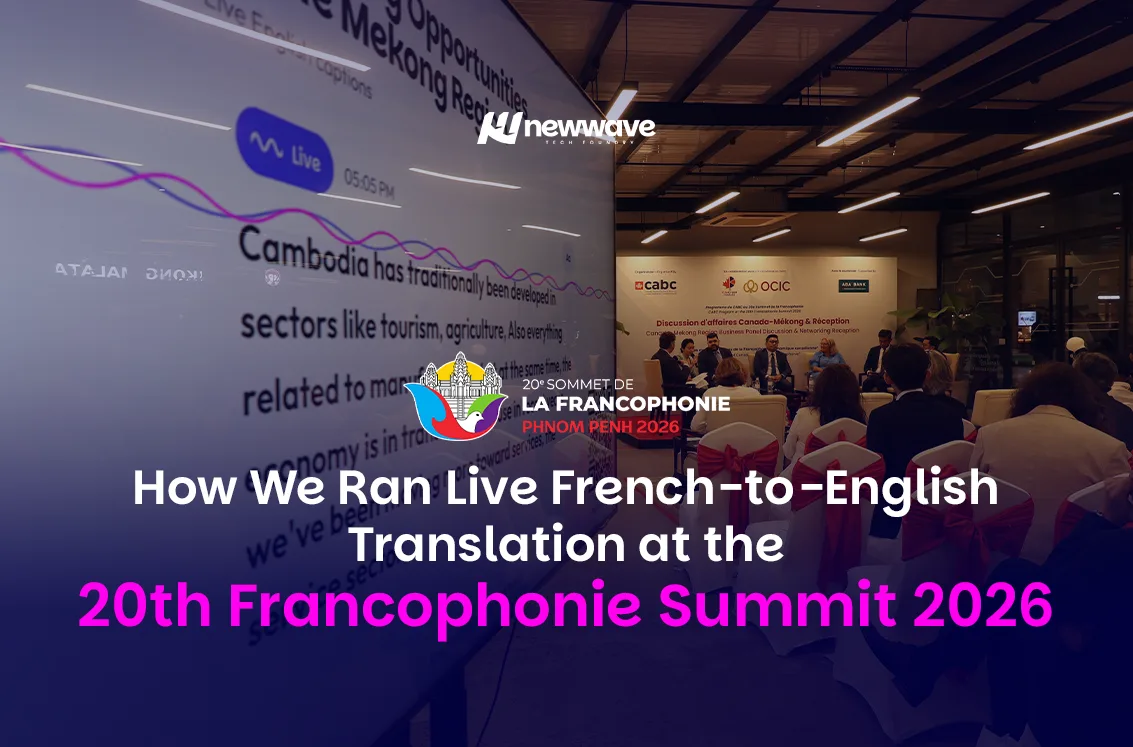
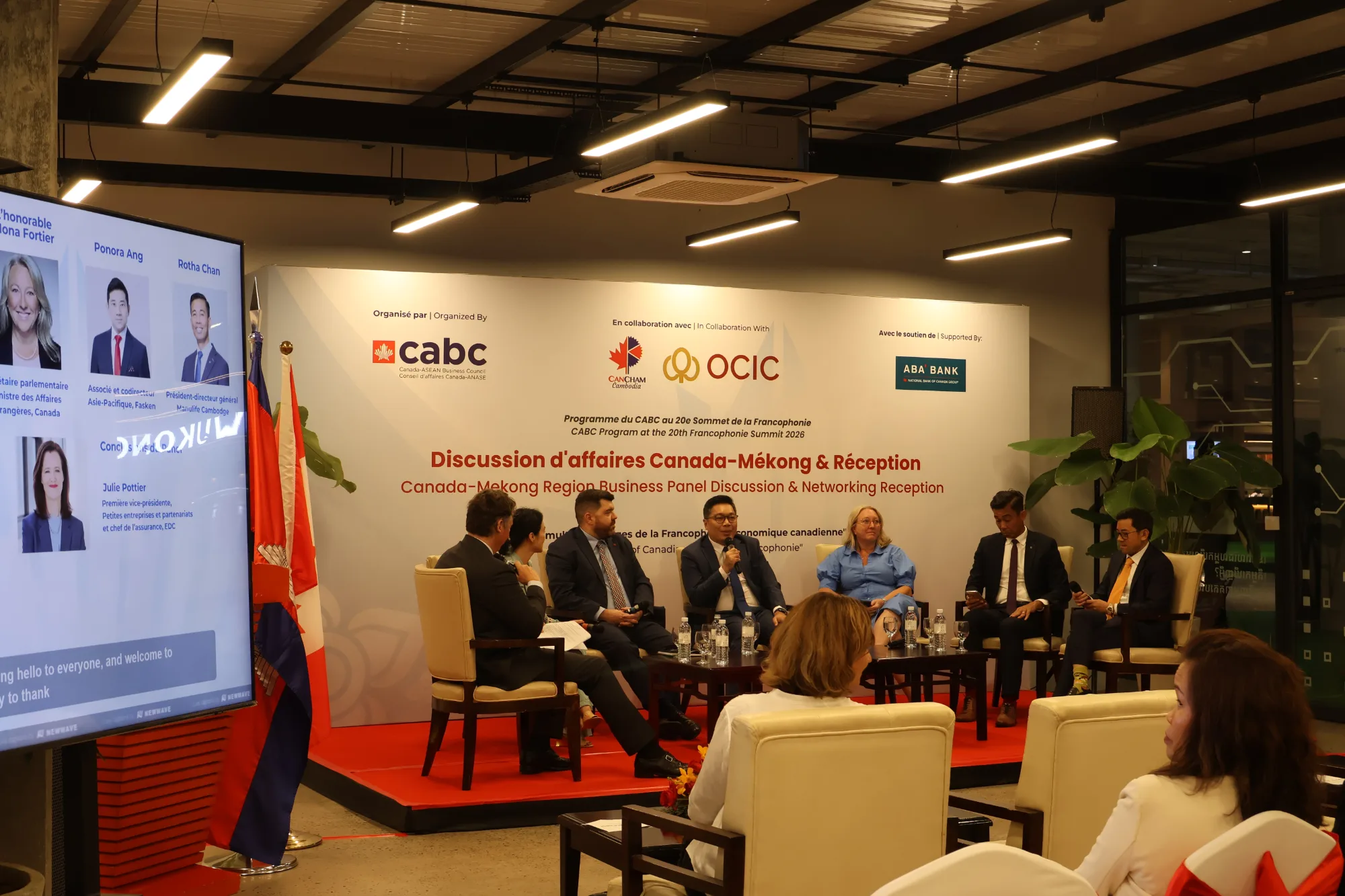
We connected our live translation system directly to the venue’s professional sound system. All six microphones in the room fed into it, so whoever was speaking at that moment was picked up and translated automatically.
On stage, the system kept the whole room on one feed:
- When a speaker talks in French, it outputs English.
- When a speaker talks in English, it outputs English.
That means the audience always sees one continuous English feed, no matter which language the panel switches to. And it happens almost instantly, at around half a second from speech to text. No human interpreter, no headsets, no waiting.
How the room experienced it
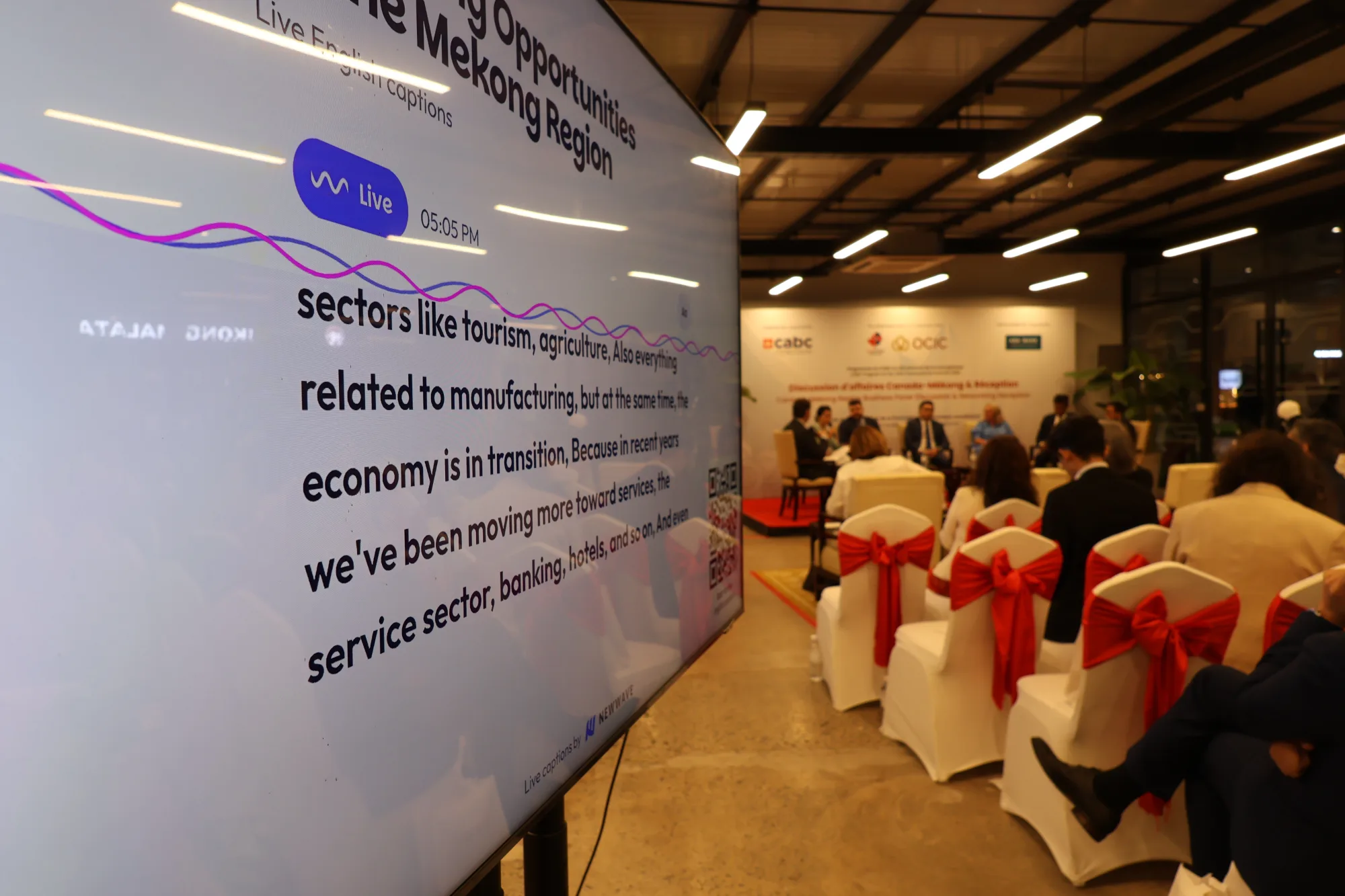
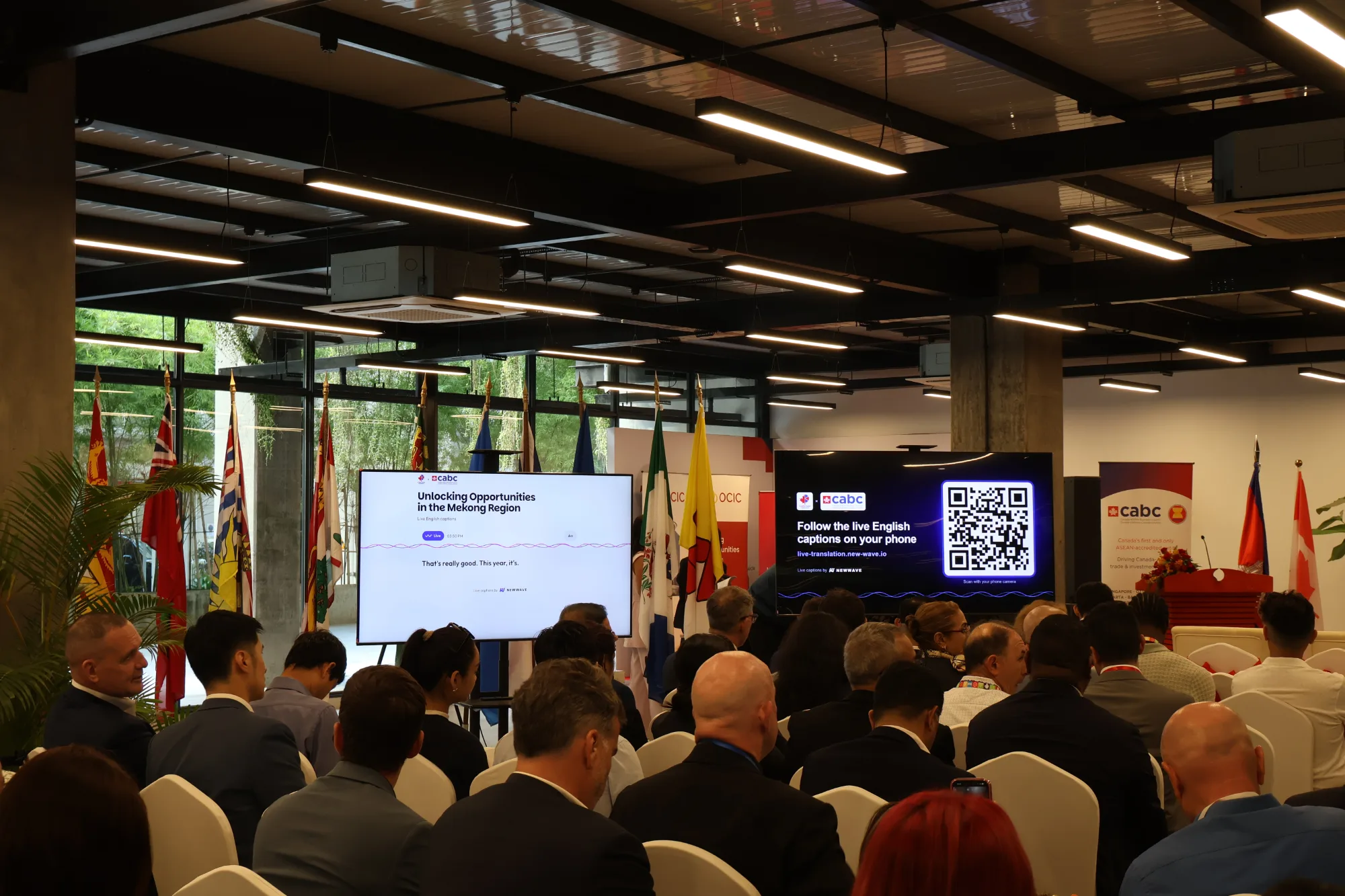
We gave every attendee three ways to follow along, so they could choose what suited them:
- Screen one showed the presentation slides, with the live English translation running as subtitles along the bottom. Attendees could follow the slides and the speaker at the same time.
- Screen two showed the translation full screen, with no slides. For anyone who wanted to focus purely on what was being said, it gave them a clean, readable transcript as the panel unfolded.
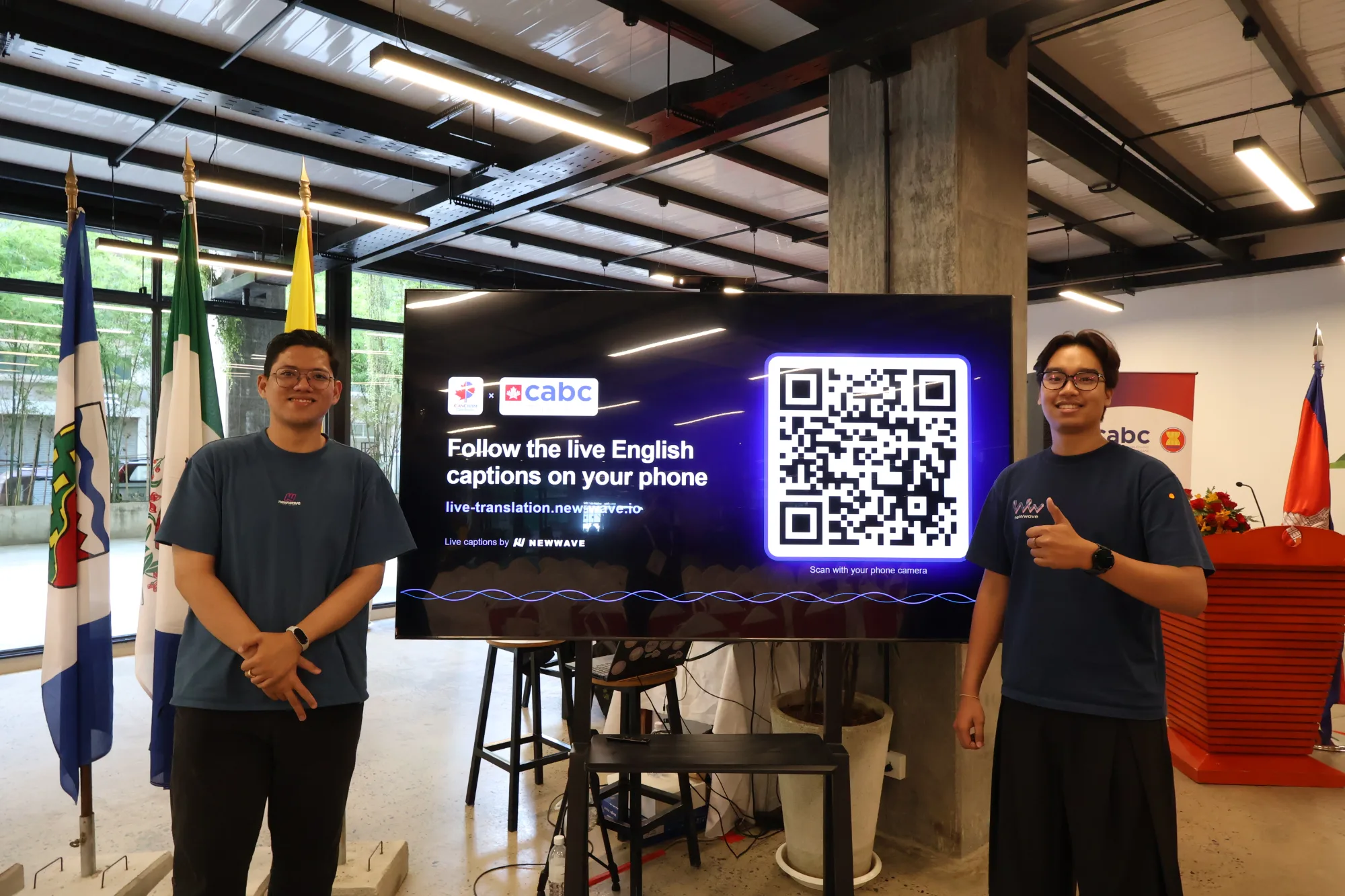
- Their own phone. A QR code in the room opened a live web page on attendees’ phones, showing the same translation in real time. No app to download, and no need to look up at a screen. Guests could follow every speech and panel answer right from their seat.
The result was a panel that worked for French and English speakers in the same room, at the same time.
More than a showcase
The system was also running live at our booth at FrancoTech, where anyone from the public could walk up and try it for themselves.
At the booth, it worked as a two-way conversation tool. Speak in French and it outputs English. Speak in English and it outputs French. It detects the language on its own, so there’s no need to switch modes or press a button between speakers.
That turned out to matter. Most of our team doesn’t speak French, and many of the French-speaking visitors who came by didn’t speak English or Khmer. Live translation became the way we actually talked to each other: visitors spoke in French, our team replied in English, and both sides followed along in their own language. It was a working tool at the booth, not just something to look at.
Why this matters
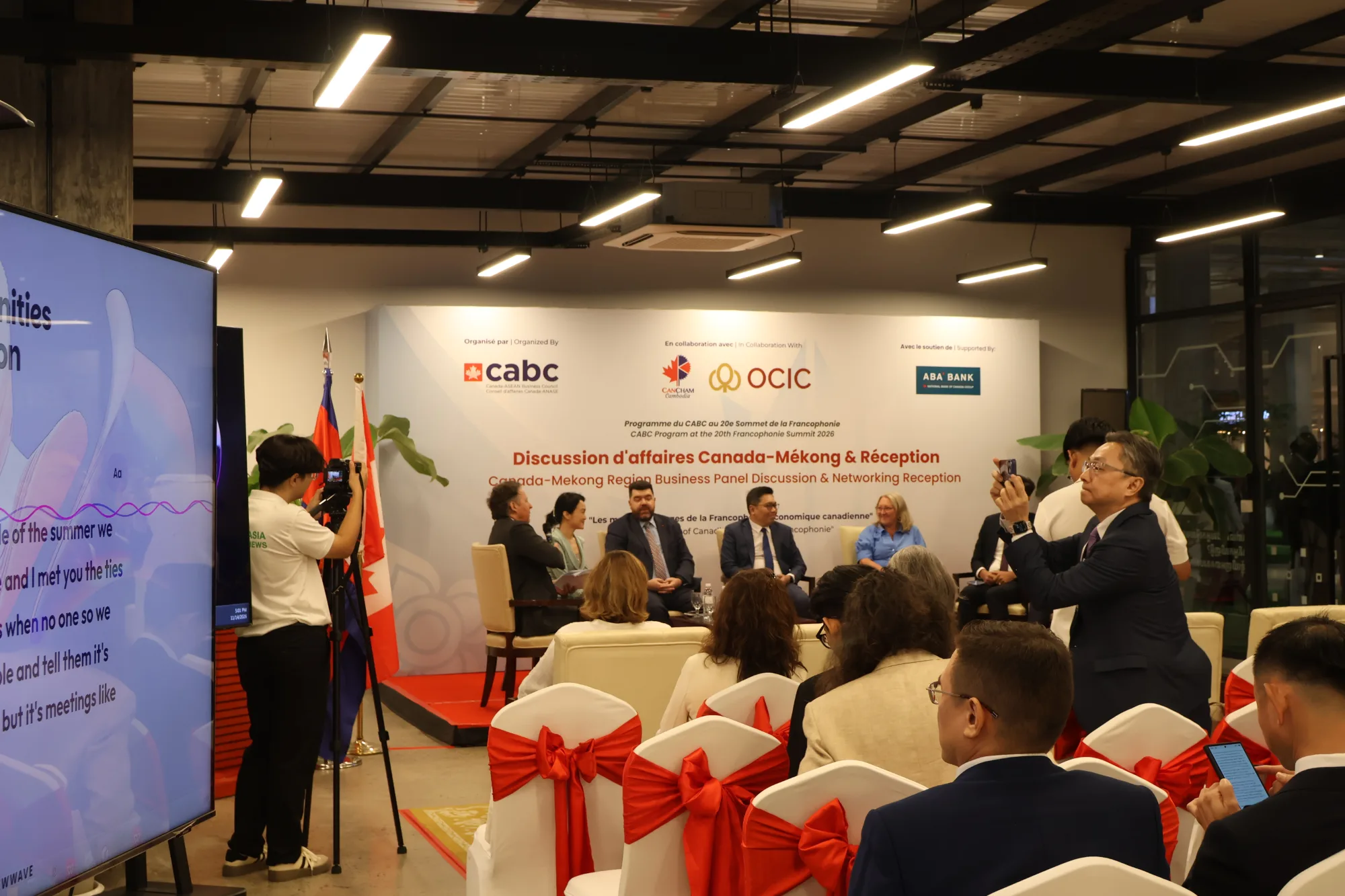
Language is still one of the biggest barriers in international business. Events like the Francophonie Summit bring together leaders from dozens of countries, but conversations only create value when everyone in the room can follow them. Traditional interpretation is expensive, needs specialist staff and equipment, and is rarely available outside the main sessions.
Live translation changes that. It makes multilingual panels, meetings and everyday conversations accessible without the cost and complexity of a full interpretation setup.
It also speaks to a bigger question raised at this year’s Summit: whether technology will flatten linguistic diversity or protect it. We believe the answer depends on how it’s built. Used well, it doesn’t replace a language. It lets more people take part in the conversation.
Built to solve real problems
The live translation system was not built as a product for sale. It was built to show what is possible when strong engineering meets a real-world problem. The same thinking goes into every system we build for our clients: understand the real need, then engineer something that works in the moment it matters.
[Have a challenge that needs a custom solution? Book a free consultation with our team. ]